115 / How we work
A question, a test,
and a person who decides.
115 is two people trading our own capital. We write the software we work in, test every idea on data it has never seen, and keep each decision with one of us.
01 / Question
Write the question down first.
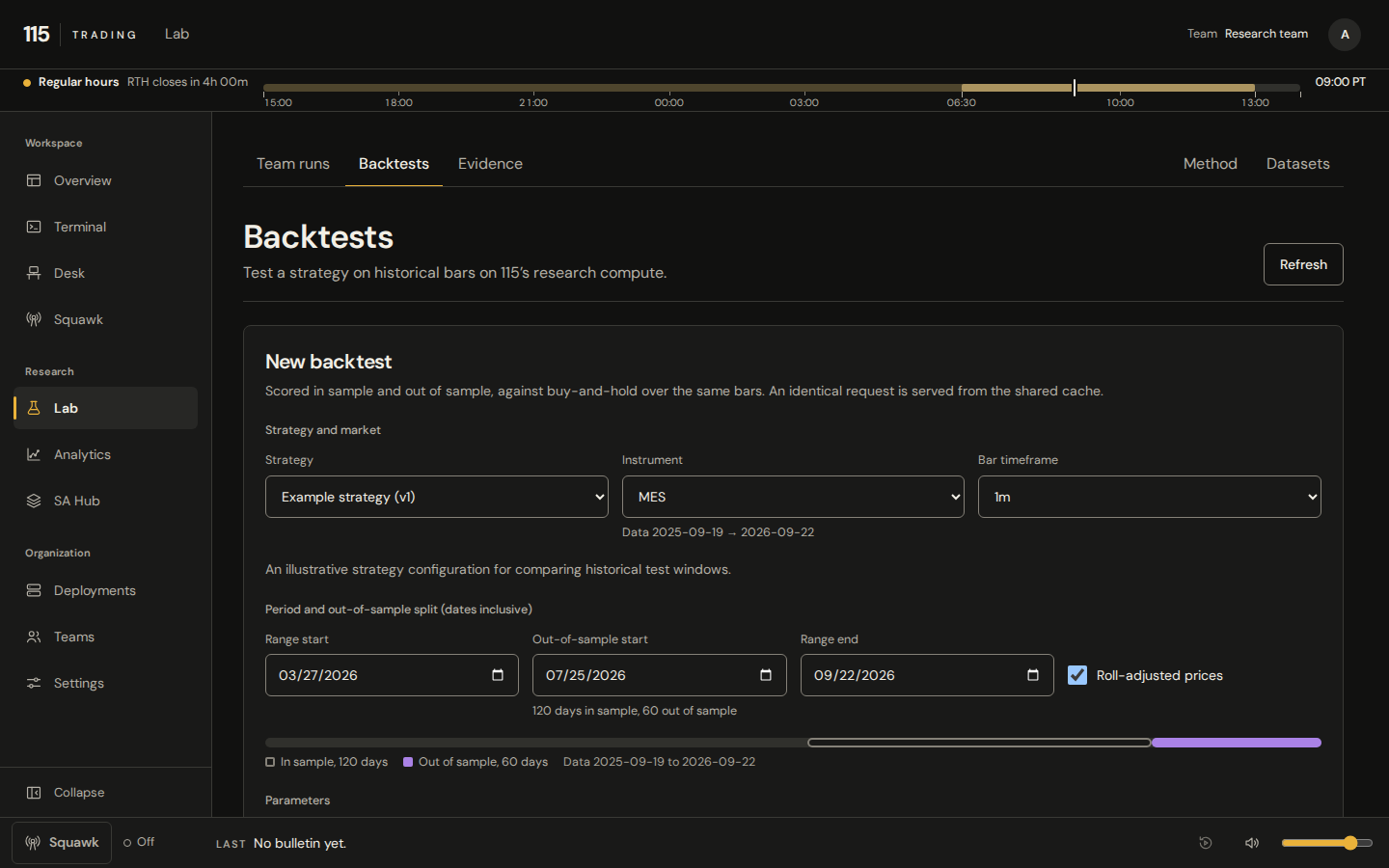
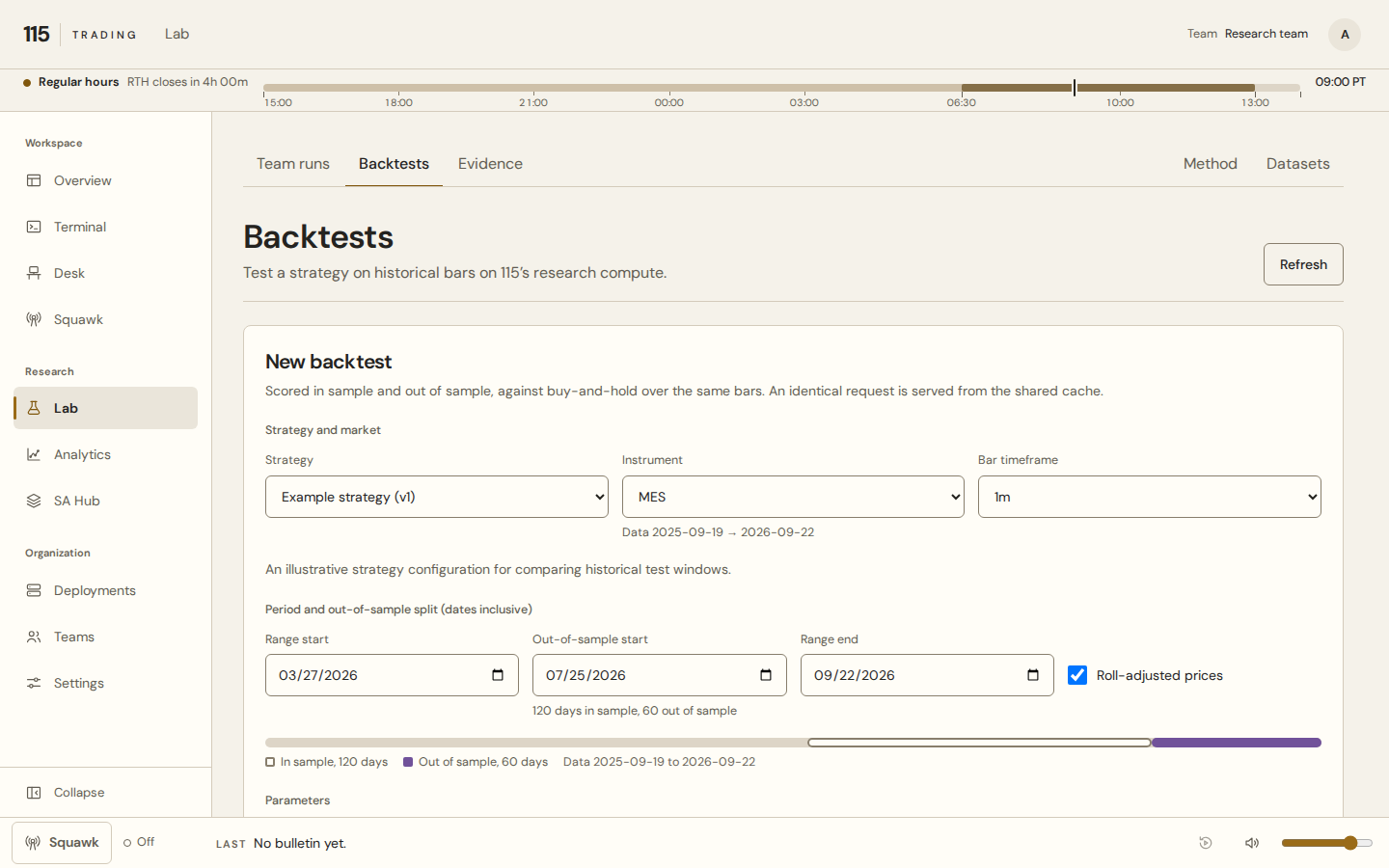
Work starts as a question with its instrument, data window, costs and evaluation split stated before anything runs. The inputs are part of the experiment, so they are kept with it.
A failed run is not a finished test, and a missing measurement is not filled in from somewhere else. The record says what it knows.
02 / Evidence
Out of sample, or it doesn’t count.
We tune on one window of history and judge on the window after it, then roll forward across years and regimes. Nothing is scored on data it was fitted to.
Most ideas end here. The ones that fail stay in the record beside the ones that held, because the failures are what sharpen the next question.
The walk-forward lab, in fullSix folds · three years tuned, one year judged
03 / The desk
Context before action.
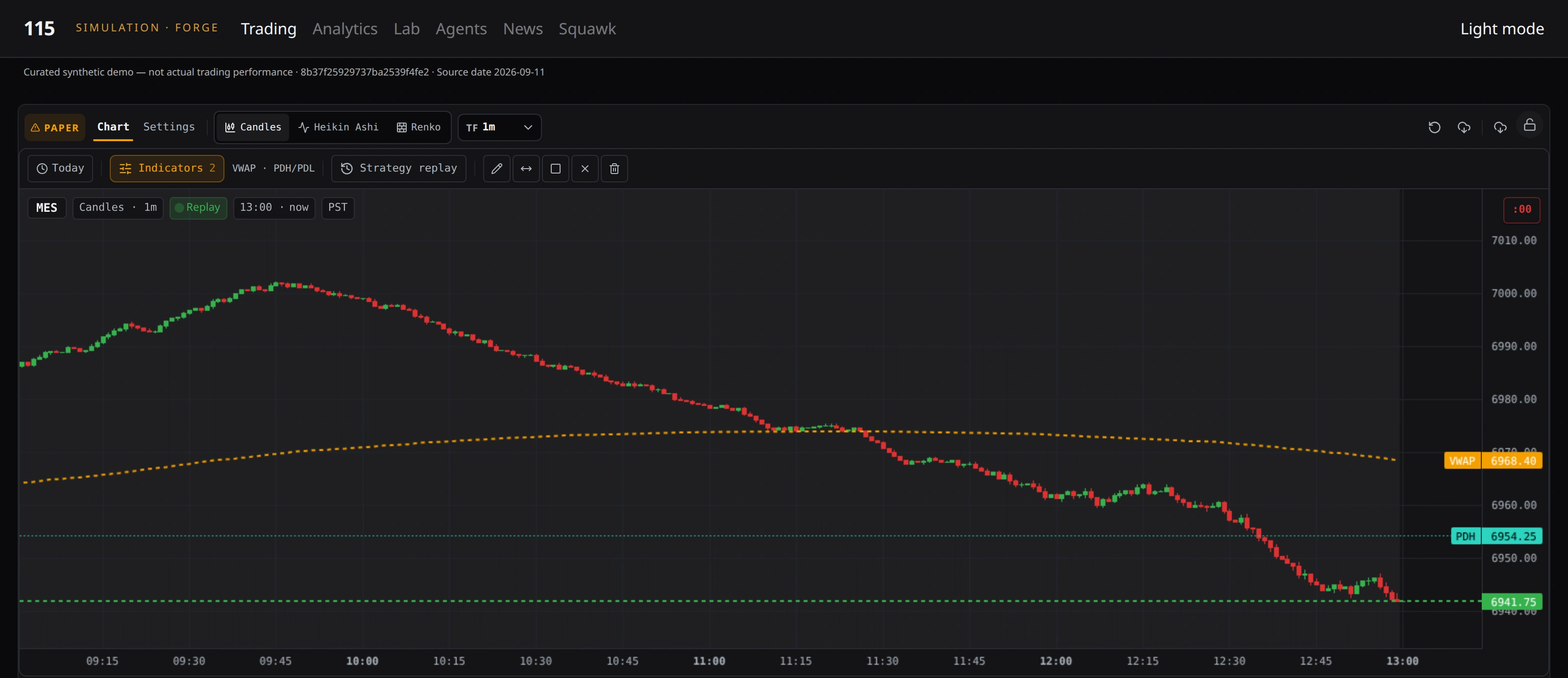
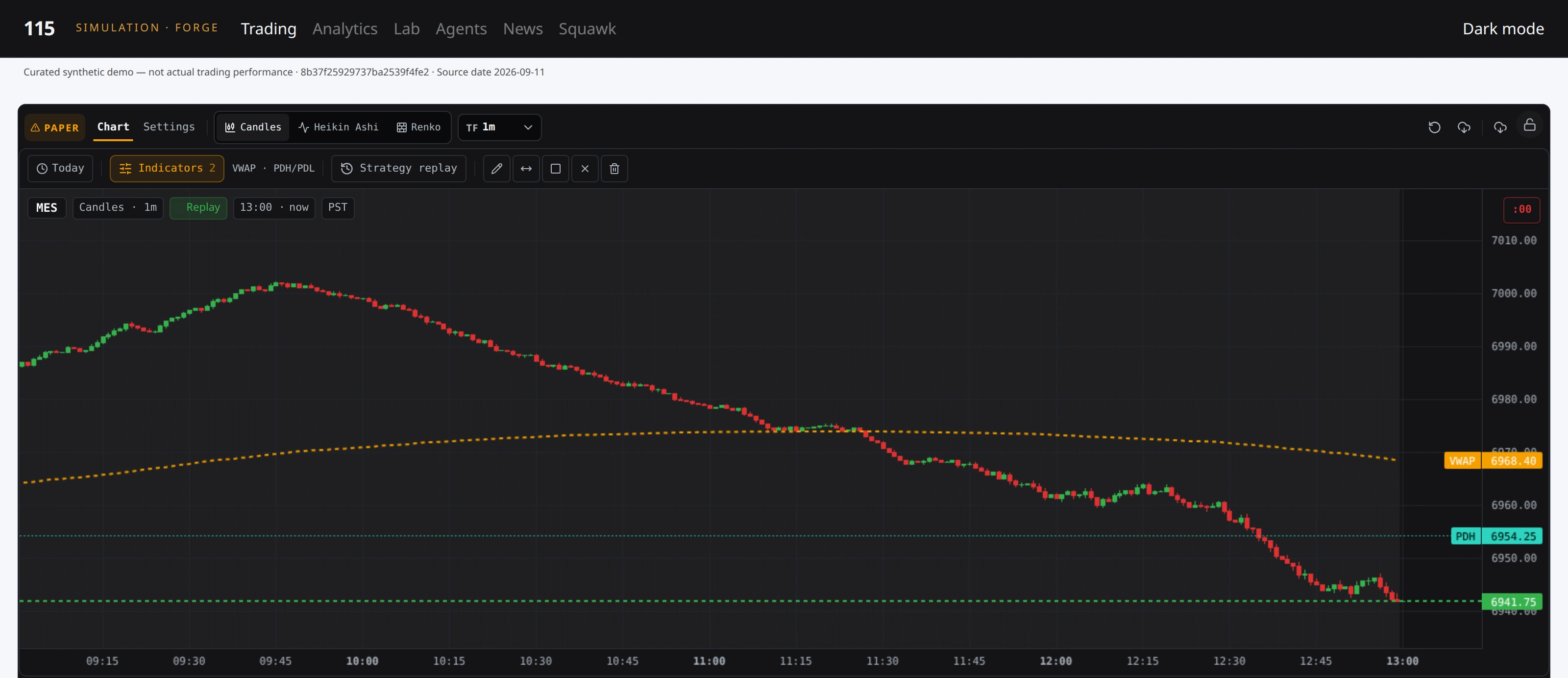
During the regular session the desk keeps price, structure, news and system state in one field of view. A spoken channel follows the session, so either of us can step away from the screen and still hear what matters.
The questions a session raises go back to research the same evening. That loop is most of what we build.
04 / Decisions
Software proposes. A person decides.
Models and agents gather context, run research jobs and keep the desk observable. Anything that touches risk or the order path is chosen by one of us, and we keep a few rules that do not bend.
- One name on the trade.
Nothing reaches the market without a person who is answerable for it.
- Out of sample, or it doesn’t run.
A result measured on data the model was fitted to is not a result.
- Costs are modeled, not assumed.
Spread, slippage and fees are attached from the first run, not the last.
- The loss limit is set before the open.
The desk asks for the day’s stop at the start of the session, and says so in amber when there isn’t one.
05 / Building
We build what we use.
The data pipeline, the research workbench and the desk are written in-house: Python for research and modeling, TypeScript for the desk, on an event-driven execution core we chose rather than wrote.
Owning the stack is what lets us replay a session a year later and get the same answer. It also means every flaw is ours to notice, and ours to fix.